
How to Switch Careers into IT (With No Experience)

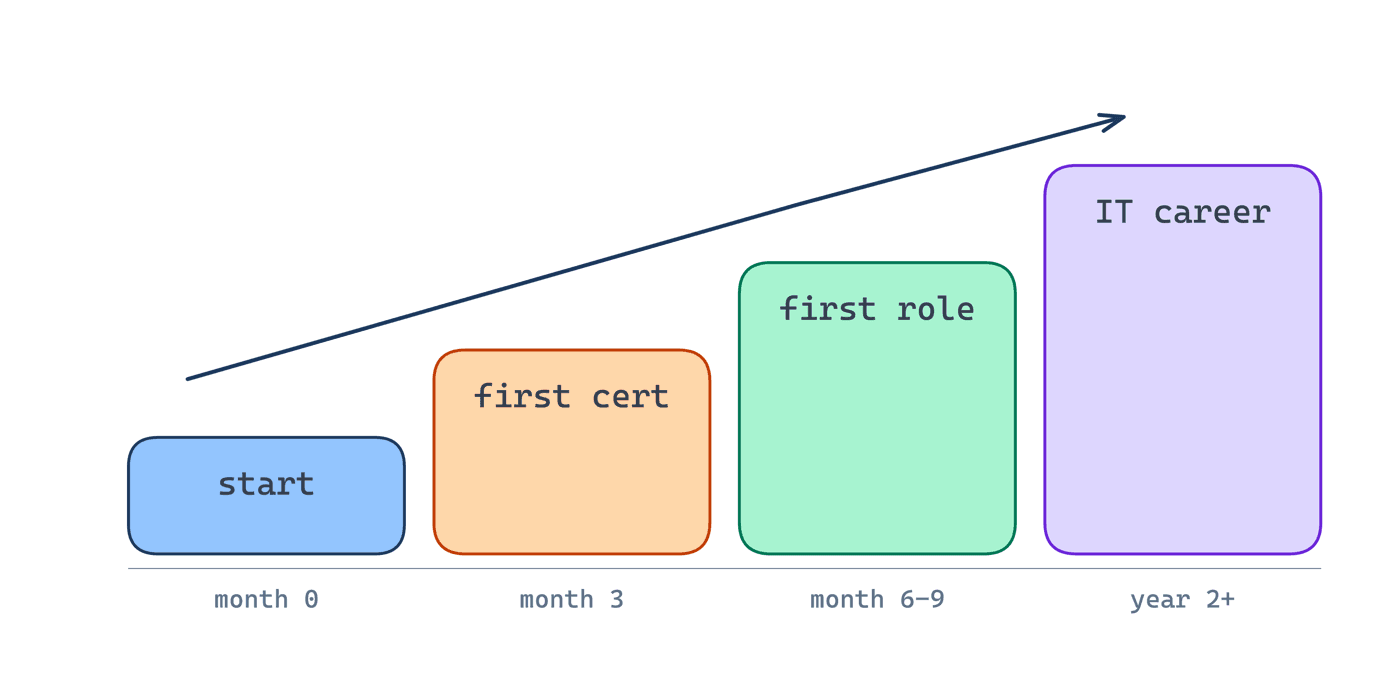
Switching into IT from another career is one of the smartest moves you can make in 2026. The demand for IT professionals in Canada continues to outpace supply, salaries are strong, and, unlike many professions, you don't need a four-year degree to get started.
But the path isn't always obvious, especially if you've never worked in technology. Here's the practical, no-fluff roadmap that has worked for hundreds of CISNET students who made the switch.
Step 1: Understand What "IT" Actually Means
"IT" is a broad field. Before you invest in training, understand the main career tracks:
Help Desk / Technical Support, Entry-level. You troubleshoot hardware, software, and network issues for end users. Salary: $40,000-$55,000 CAD.
Network Administration, You manage routers, switches, firewalls, and network infrastructure. Salary: $55,000-$80,000 CAD.
Cloud Engineering, You design and manage cloud infrastructure on AWS, Azure, or GCP. Salary: $80,000-$130,000 CAD.
Cybersecurity, You protect organizations from threats. Ranges from SOC analyst to security architect. Salary: $60,000-$150,000 CAD.
Project Management, You lead IT projects and teams. Salary: $75,000-$120,000 CAD.
Most career changers start in help desk or network administration, then specialize within 2-3 years.
Step 2: Get Your First Certification
You don't need a degree. You need proof that you know the fundamentals. Here are the two best starting certifications:
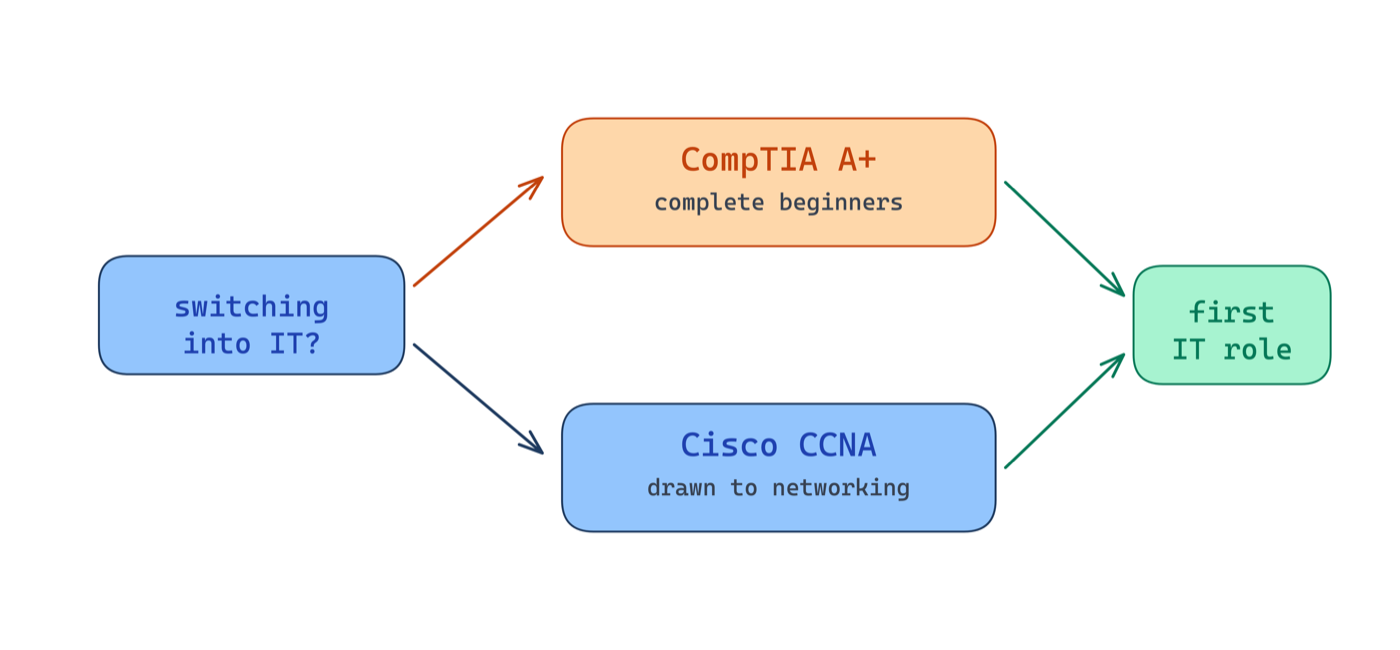
Option A: CompTIA A+ (Best for Complete Beginners)
The A+ covers hardware, software, networking basics, and troubleshooting. It's the universal entry ticket to IT support roles. No prerequisites, no experience required.
Timeline: 2-3 months of study
Cost at CISNET: $599 CAD (includes lab access and study materials)
Exam fee: ~$250 USD per exam (two exams required)
Option B: Cisco CCNA (Best if You Know You Want Networking)
If you're drawn to networking specifically, the CCNA is a stronger first cert. It's more challenging than the A+ but opens higher-paying doors immediately.
Timeline: 3-4 months of study
Cost at CISNET: $599 CAD
Exam fee: ~$330 USD
Our recommendation for most career changers: Start with CompTIA A+ unless you have a strong technical aptitude and are specifically interested in networking.
Step 3: Build Hands-On Experience (Even Without a Job)
Employers want to see that you can do the work, not just pass a test. Here's how to build experience before you have a job:
Set up a home lab. A used switch, a router, and a couple of old PCs cost under $200 total. Configure VLANs, set up DHCP, practice subnetting. Document everything.
Volunteer. Non-profits, community centers, and small businesses often need IT help and can't afford to hire. Offer to set up their network, troubleshoot their computers, or migrate them to Google Workspace. This is real experience you can put on your resume.
Get an AWS free tier account. Deploy a web server, set up a VPC, create an S3 bucket. AWS gives you 12 months of free tier services, that's a year of free cloud lab time.
Build a portfolio. Create a simple website or GitHub repository documenting your lab work, configurations, and projects. It doesn't need to be fancy. It needs to show you can do the work.
Step 4: Craft Your Resume for IT
Your previous career experience is more valuable than you think. Here's how to translate it:
- Customer service → "Provided technical support and troubleshooting for end users"
- Management → "Led cross-functional teams and managed project timelines"
- Sales → "Communicated technical solutions to non-technical stakeholders"
- Teaching → "Developed and delivered training materials for technical processes"
- Any role → "Documented processes, identified inefficiencies, and implemented improvements"
Structure your resume with: 1. Certifications at the top (this is your credential now) 2. Technical skills, list specific technologies, tools, and protocols 3. Projects, your home lab, volunteer work, cloud deployments 4. Work experience, translated to show transferable skills
Step 5: Land Your First IT Role
Where to Look
- LinkedIn, Set up job alerts for "IT Support," "Help Desk," "Junior Network Administrator"
- Indeed, Filter by entry-level and "no degree required"
- Company career pages, Banks, hospitals, school boards, and government agencies hire lots of IT support staff
- Staffing agencies, Robert Half Technology, TEKsystems, and Randstad place entry-level IT candidates regularly
The Interview
Technical interviews for entry-level roles typically cover: - Basic networking (What's the difference between a switch and a router? What is DHCP?) - Troubleshooting scenarios (A user can't access the internet, walk me through your steps) - Operating system knowledge (How do you reset a password in Active Directory?) - Customer service situations (How do you handle a frustrated user?)
If you've completed your certification training and done your lab work, you'll be well-prepared for these questions.
Step 6: Keep Growing
Your first IT role is the hardest to get. After that, the path opens up. Here's a typical 5-year progression for a career changer:
Year 1: Help Desk / IT Support ($40,000-$55,000)
Year 2: Junior Network or Systems Administrator ($55,000-$70,000)
Year 3: Network Administrator + CCNA or cloud cert ($65,000-$85,000)
Years 4-5: Specialist role (Cloud Engineer, Security Analyst, Network Engineer) ($80,000-$120,000)
That's going from zero IT experience to a six-figure career in five years. It requires consistent effort, continued learning, and strategic certification choices, but it's a path hundreds of people walk every year.
Real Talk
Switching careers is hard. There will be moments when you feel overwhelmed by the technical material. There will be days when the job search feels discouraging. That's normal.
What makes the difference is having a structured learning environment, access to experienced instructors who can answer your questions, and a community of people going through the same journey.
That's exactly what CISNET provides. Our instructors have helped thousands of career changers, from teachers, truck drivers, accountants, and retail workers, build successful IT careers. If they can do it, you can too.


